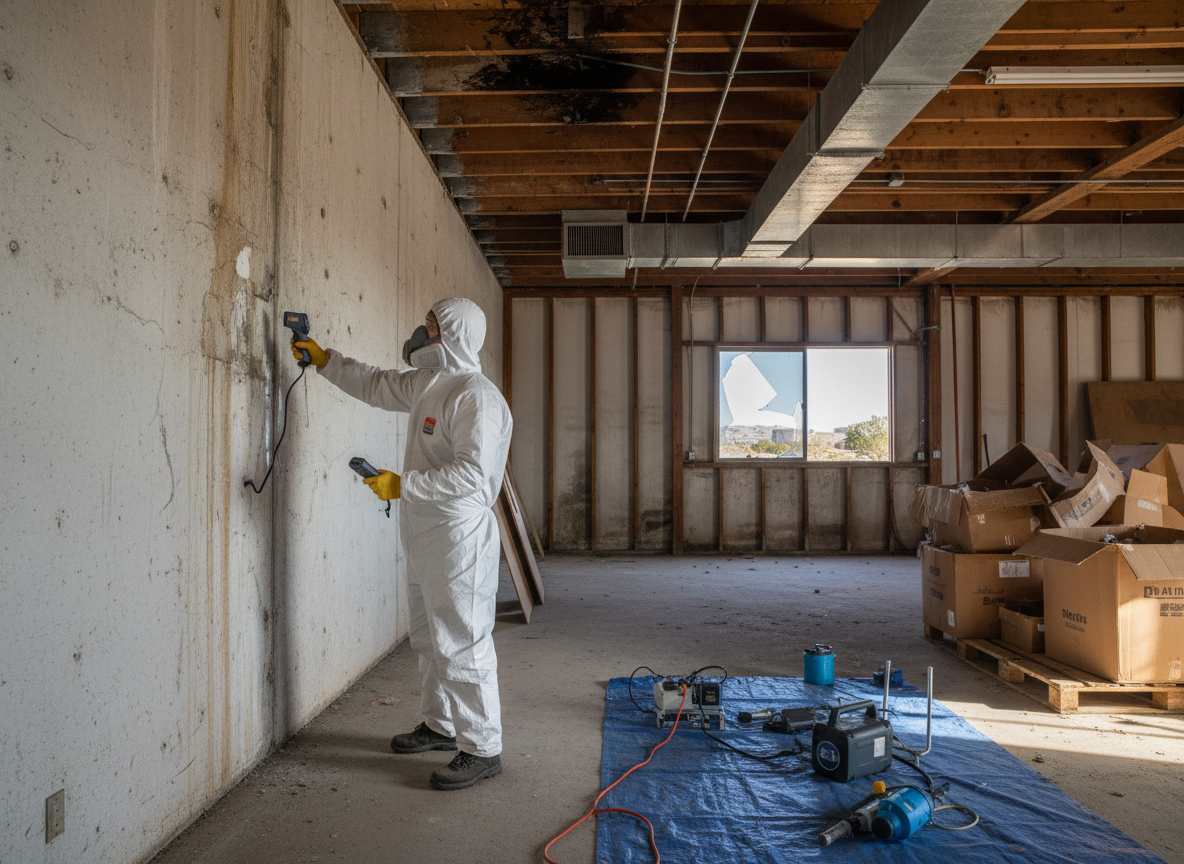
Commercial properties in Pinon Hills face unique moisture challenges from the high desert climate where hot summers drive HVAC condensation and cold winters create roof leaks at expansion joints. Inspections must account for older metal and wood-frame structures common along CA-138 and in surrounding San Bernardino County areas like Phelan and Victorville. Technicians examine supply and return plenums, flat roof drains, and slab edges where water migrates under stucco or tilt-up panels without visible interior staining.
Edge cases include undetected growth behind vinyl wall coverings in retail spaces and in drop-ceiling plenums serving medical or dental offices near the Pinon Hills Community Center. Air sampling protocols differ from residential work because commercial ventilation rates and occupancy loads affect spore distribution. Reports reference local building department requirements for San Bernardino County and note when further destructive testing or moisture mapping is needed before any remediation plan.
Inspectors also evaluate exterior grading around parking lots and loading docks where monsoon runoff pools against foundations. In Wrightwood-adjacent commercial sites, snow-melt infiltration through poorly sealed roll-up doors often leads to mold in storage rooms. Every inspection includes thermal imaging of walls adjacent to restrooms and kitchens plus documentation of any prior water events reported by property managers.
Technician insight
In Pinon Hills, the thing that catches most people out with Commercial mold inspection is how quickly roof leaks at parapet walls travel along the underside of metal decking before showing up on drop ceilings. The high desert freeze-thaw cycles around Wrightwood and Phelan open seams that summer monsoons then exploit, so we always check the roof edge first even when the complaint is only about musty air in the back office.
Retail Strip Center on CA-138
A property manager reported persistent odors in two end-cap suites after heavy winter rain. We found condensation on the rooftop HVAC unit serving the space plus water tracking along the metal deck from a clogged scupper. Targeted sampling confirmed elevated spores in the return plenum; we isolated the unit, documented the path of moisture, and provided the manager with a prioritized repair sequence that addressed both the immediate growth and the drainage issue before any remediation began.
How it works
- 1
Site Walk and Document Review
Review building plans, past water incidents, and HVAC maintenance logs while walking the interior and perimeter with the property contact.
- 2
Moisture and Thermal Survey
Use moisture meters and infrared cameras on walls, ceilings, and floors, focusing on HVAC zones, restrooms, and roof penetrations typical in high-desert commercial stock.
- 3
Air and Surface Sampling
Collect targeted air samples from occupied and return-air zones plus surface swabs from suspect materials for laboratory analysis.
- 4
Findings Report and Recommendations
Deliver a written report with photos, lab results, and prioritized next steps that reference San Bernardino County requirements and local weather patterns.
Pricing
Pricing depends on square footage, number of HVAC zones, and access constraints; call 24/7 for an upfront assessment from our Pinon Hills location.