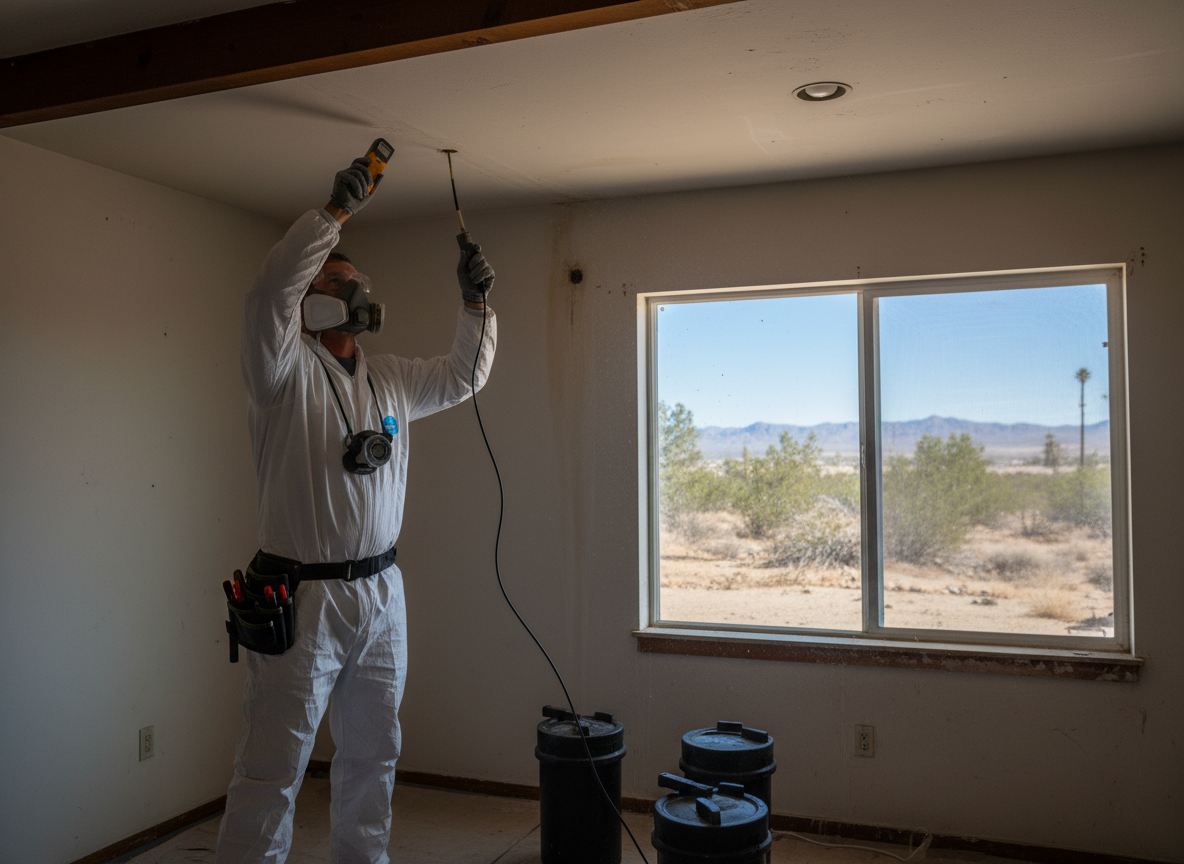
Pinon Hills sits in San Bernardino County high desert where hot summers drive air conditioning use and cold winters create attic condensation when warm indoor air meets uninsulated roof decks. Older single-story homes built along CA-138 and in surrounding neighborhoods often have crawl spaces with poor ventilation and slab-on-grade construction that traps moisture from occasional winter rains or plumbing leaks. A proper inspection starts with moisture mapping using meters on drywall, subflooring and attic sheathing rather than visual checks alone, because mold can hide behind textured walls common in 1980s and 1990s builds here.
Inspectors check HVAC returns and ductwork because desert dust plus temperature swings can push spores through the system into living spaces. Edge cases include mold growth around evaporative cooler pads that many residents still use and hidden colonies in bathroom exhaust fans that vent into attics instead of outdoors. San Bernardino County building practices from earlier decades left many homes with single-pane windows that sweat heavily in winter, creating ideal conditions along sills and headers. The inspection also notes any prior roof repairs common after high winds that funnel through the Cajon Pass corridor.
Findings are documented with photos and moisture readings so homeowners can see exactly which areas need attention before remediation begins. This prevents unnecessary demolition in areas that only show staining from past leaks that have since dried out due to the arid climate.
Technician insight
In Pinon Hills the thing that catches most people out with home mold inspection is winter condensation in attics on homes built before 2000. The big temperature swings between freezing nights and heated interiors push moisture into roof sheathing that never dries out in the high desert, and many owners only notice it after the ceiling stains.
Attic Condensation Found in Phelan Road Home
Homeowner noticed musty smell after a cold snap. Inspection located elevated moisture on north-facing roof decking and mold on insulation batts. We isolated the area, removed affected insulation, and advised adding ridge venting to match local high desert airflow patterns. Follow-up readings showed levels returned to normal.
How it works
- 1
Initial Walkthrough
Review home history and visible moisture sources while walking through every room, attic access and crawl space entry in Pinon Hills properties.
- 2
Moisture and Humidity Testing
Use calibrated meters on walls, floors and ceilings plus relative humidity readings to locate active or past water intrusion points.
- 3
Air and Surface Sampling
Collect samples from suspect areas and compare indoor versus outdoor spore levels to determine if amplification is occurring.
- 4
Detailed Reporting
Deliver findings with photos, readings and recommended next steps specific to high desert construction details.
Pricing
Inspection cost depends on square footage, number of stories and access difficulty; upfront quotes provided before work begins.